
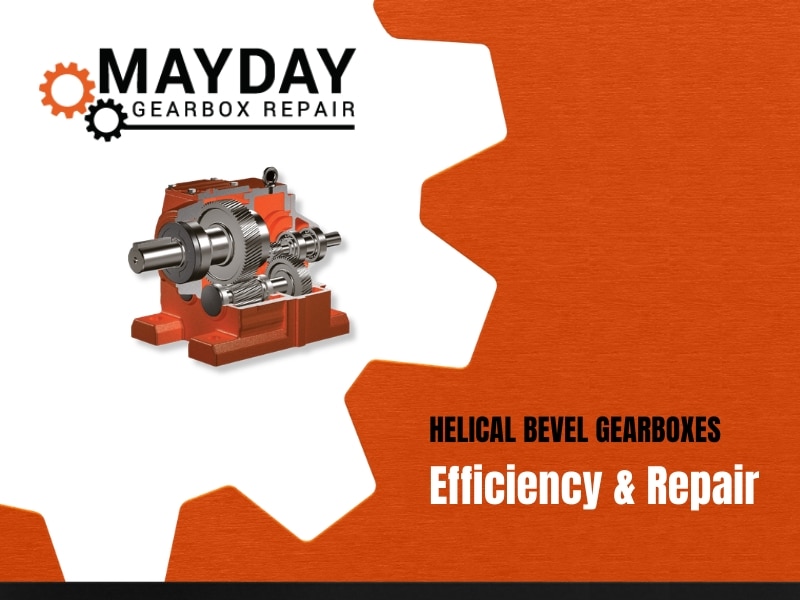
Helical Bevel Gearboxes: Efficiency and Repair Considerations
A helical bevel gearbox redirects power through a right angle while keeping tooth engagement smooth enough for continuous industrial loads, which is what separates spiral bevel gearing from a straight bevel design that would generate more noise and impact loading at the same duty. Engineers select a helical bevel gearbox where right-angle transmission, high torque capability, compact equipment geometry, and continuous-duty reliability all have to coexist — a combination that’s straightforward until alignment or lubrication falls out of spec, at which point the same gradual tooth engagement that makes the design efficient also makes it sensitive to error.
How does helical bevel gearing improve load distribution over straight bevel gears?
Spiral bevel teeth engage gradually along a curved tooth profile rather than contacting all at once, spreading load across more of the tooth surface at any given moment. That gradual engagement reduces impact loading and noise, while allowing a helical bevel gearbox to carry higher torque for its size than a comparable straight bevel design.
What causes bevel gear wear in a helical bevel gearbox?
Improper backlash, contamination in the lubricant, misalignment between the gearbox and driven shaft, or incorrect bearing preload are the most common drivers of accelerated wear in these types of gearboxes. Because bevel gearsets are more sensitive to alignment than parallel-shaft designs, even minor installation errors can shorten service life significantly, often showing up first as unusual tooth contact or a rising operating temperature.
What does a helical bevel gearbox rebuild typically involve?
A thorough rebuild reconditions gears, pinions, shafts, bearings, seals, and housings as needed, then verifies gear tooth contact pattern before the unit returns to service — the step that confirms the repair actually addressed the root cause of wear.
Mayday reconditions and rebuilds spiral bevel and helical bevel gearbox assemblies — gears, pinions, shafts, bearings, seals, and housings — restoring the efficient right-angle transmission these units are chosen for.