Coaxial Helical Gearboxes: Alignment and Failure Modes
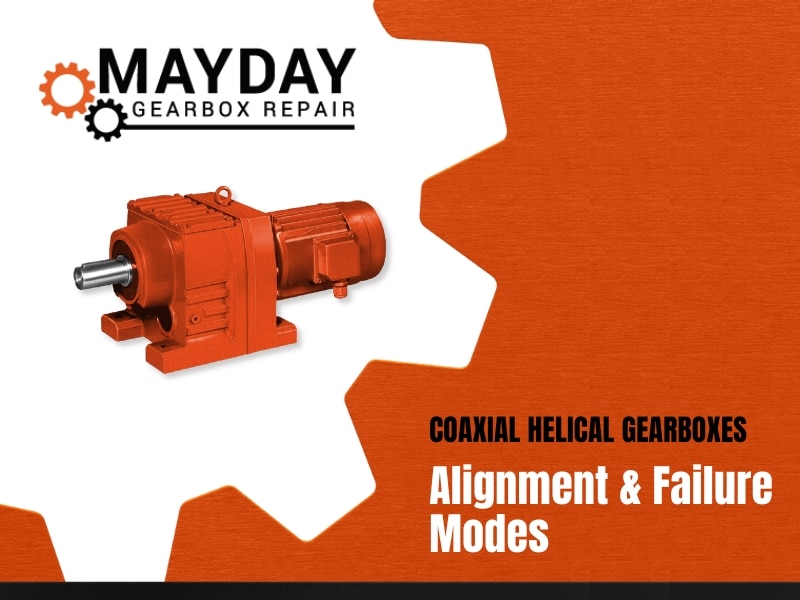
A coaxial helical gearbox keeps the input and output shafts on a single centerline, which is the cleanest mechanical solution whenever a motor and driven shaft already share that centerline — but it also means the unit has little tolerance for the misalignment a right-angle drive could absorb more easily.
Coaxial helical inline gearboxes use helical gear stages to deliver speed reduction with high efficiency and a compact footprint, and they’re regularly paired with pumps, fans, conveyors, and mixers where precise alignment and continuous-duty performance both matter. Get that alignment wrong at installation, and the same design that made the gearbox efficient becomes the reason it fails early.
Why does alignment matter so much on a coaxial inline gearbox?
Because the input and output shafts share a single centerline, even small misalignment at installation translates directly into uneven bearing loading and premature seal wear. Precision shimming and coupling alignment at installation pay off significantly over the life of the unit, and a laser alignment check is often worth the extra time on critical process equipment.
What are the most common failure modes in helical inline gearboxes?
Bearing failure from contamination or misalignment and seal failure from age or pressure differential are the two most frequent issues seen on coaxial helical gearboxes. Both tend to show early warning signs: rising temperature, oil discoloration, a slow leak, or a change in operating sound. All of this happens well before a catastrophic failure occurs.
How is gearbox efficiency measured and why does it matter here?
Efficiency is typically expressed as the percentage of input power delivered at the output shaft after gear mesh and bearing losses. On continuous-duty pumps and fans running on a coaxial helical gearbox, even a few percentage points of efficiency loss add up to meaningful energy cost over a full operating year.
Mayday supports complete repair and rebuilding of coaxial helical gearboxes — gears, pinions, shafts, bearings, seals, gaskets, cases, and housings — backed by diagnostic engineering and final testing before the unit returns to service.